

 shqiptare
 euskara
 Zulu
 Latinus
 Cymraeg
 தமிழ்
 Slovak
 Slovak
 Afrikaans
Heavy-Duty Outdoor Power Designing IP65 & Rugged UPS Systems for Extreme Environments
Oct 09,2026
Why and how we design the IP65 outdoor UPS?Cuz when critical electronic systems operate outside the air-conditioned boundaries of traditional data centers, standard Uninterruptible Power Supply (UPS) hardware fails rapidly. Industrial outdoor environments present a complex combination of operational hazards: extreme ambient temperature swings, fine dust, heavy rain, corrosive atmospheric moisture, and physical impacts.
To maintain continuous uptime in telecommunications hubs, traffic management networks, remote monitoring stations, and industrial job sites, power systems require specialized engineering. Based on top-performing industry standards for IP65, weatherproof, and ruggedized power supplies, this article explores the fundamental engineering principles of outdoor UPS design and explains why high-integrity enclosure materials—specifically rust-resistant cold-rolled steel—are vital for long-term field reliability.
Part 1: Core Design Principles of IP65 & Outdoor Rugged UPS
Designing a reliable outdoor UPS involves solving three primary engineering challenges: ingress protection, thermal management, and power quality protection.

1. Ingress Protection (IP Rating & Enclosure Sealing)
The IP65 Standard: Under IEC standard 60529, an IP65 rating signifies that the enclosure is completely dust-tight 6, offering zero ingress for airborne particulates, and protected against water jets from any direction 5.
Continuous Hermetic Sealing: Enclosure doors, cable entry plates, and access hatches are fitted with seamless polyurethane (PU) or EPDM gaskets to maintain a resilient seal across extreme thermal expansion cycles.
2. Thermal Management & Extreme Operating Ranges
Industrial Component Selection: While indoor UPS units operate in narrow thermal windows (0°C to 40°C), rugged outdoor systems utilize industrial-grade semiconductors, wide-temperature capacitors, and optimized battery chemistries rated for -20°C to +55°C or beyond.
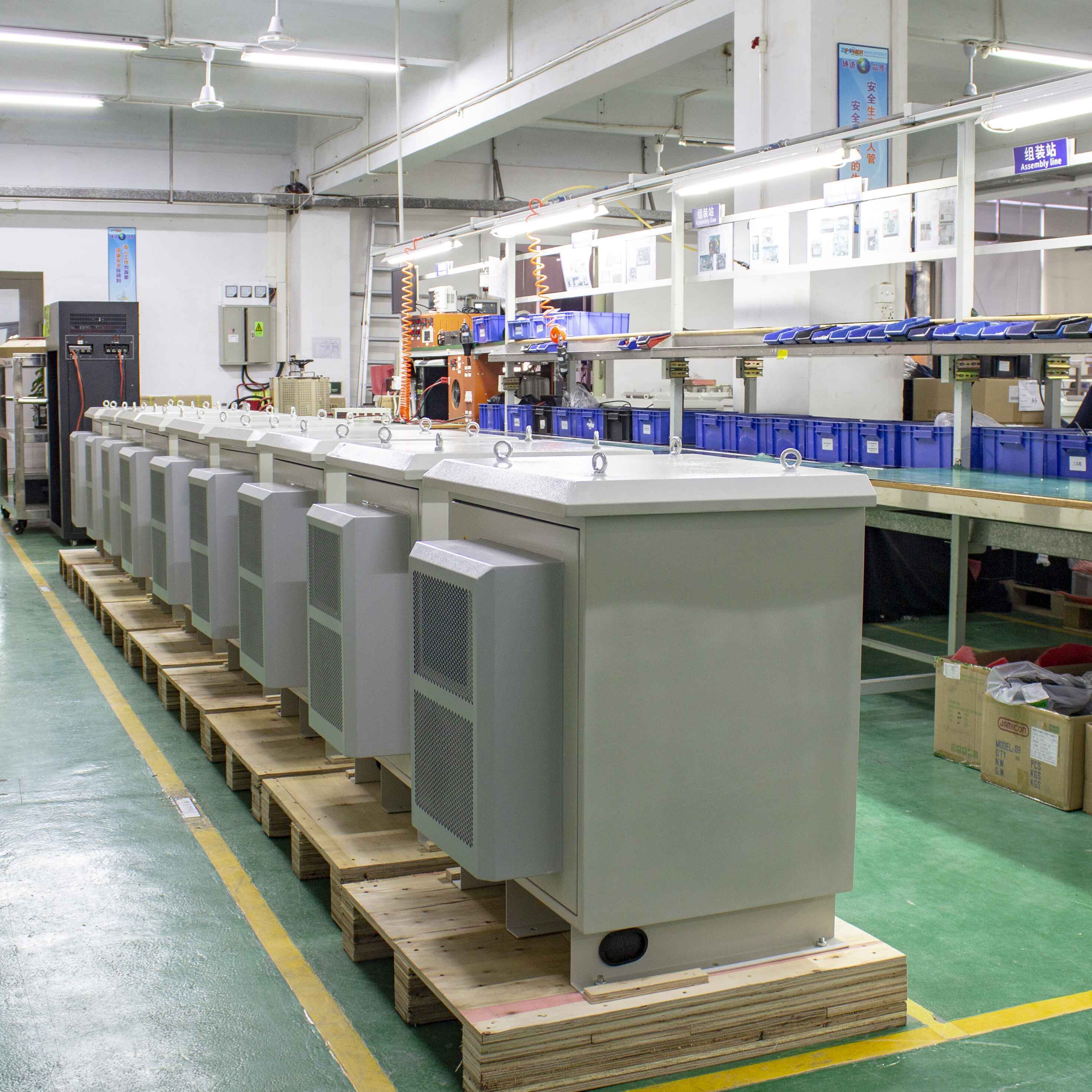
Isolated Thermal Architecture: Power electronics generate substantial heat. Outdoor designs isolate high-heat internal components (transformers and power modules) onto dedicated internal heat sinks or heat exchangers, venting heat externally without opening internal electronics to ambient air or moisture.
3. Electrical Immunity & Utility Isolation
Online Double-Conversion Topology: Rugged outdoor UPS units employ true online double-conversion architecture (AC-DC-AC). Incoming utility power is converted to DC and back to a pure sine-wave AC output, completely isolating sensitive downstream equipment from voltage sags, surges, brownouts, and frequency variations.
Multi-Stage Surge Protection: Exposed outdoor utility lines are susceptible to lightning strikes and inductive switching spikes. Integrated heavy-duty Surge Protective Devices (SPDs) shield internal power modules from high-voltage transients.
Part 2: Engineering Breakdown: Why Rust-Resistant Cold-Rolled Steel Enclosures Matter

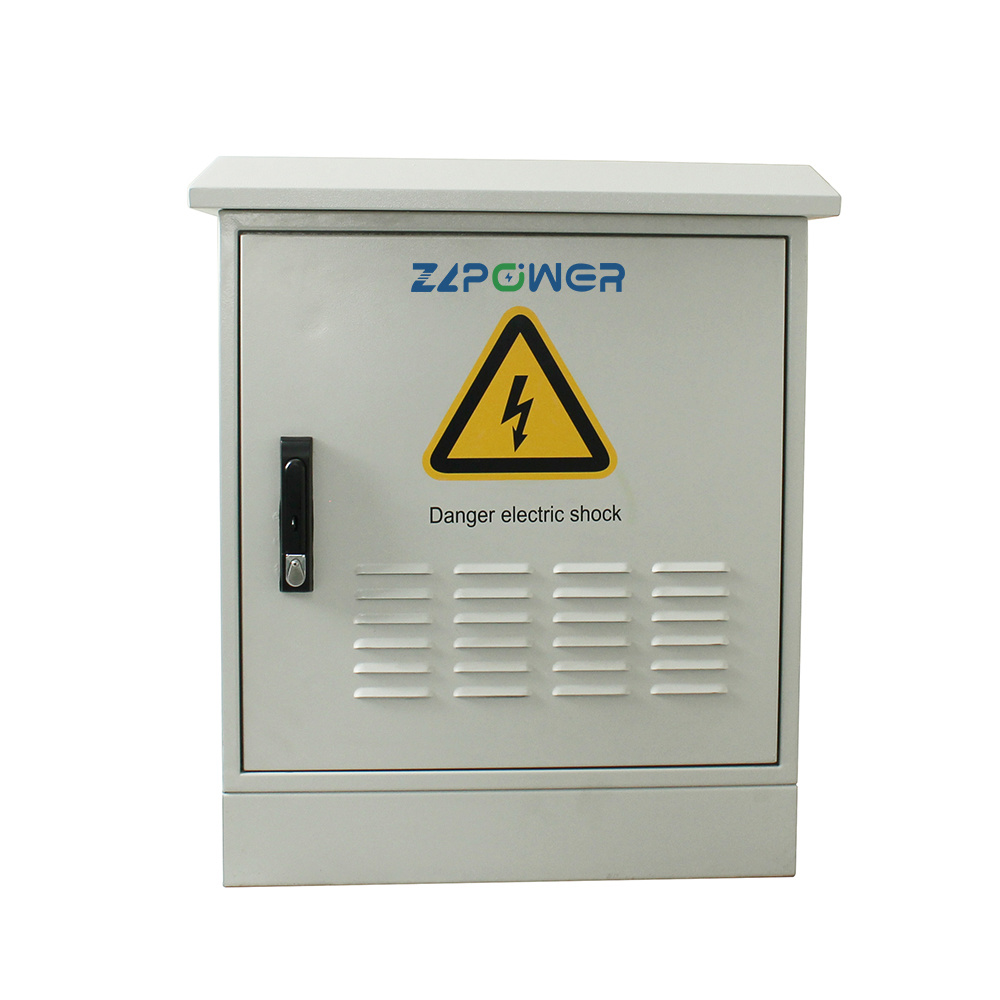
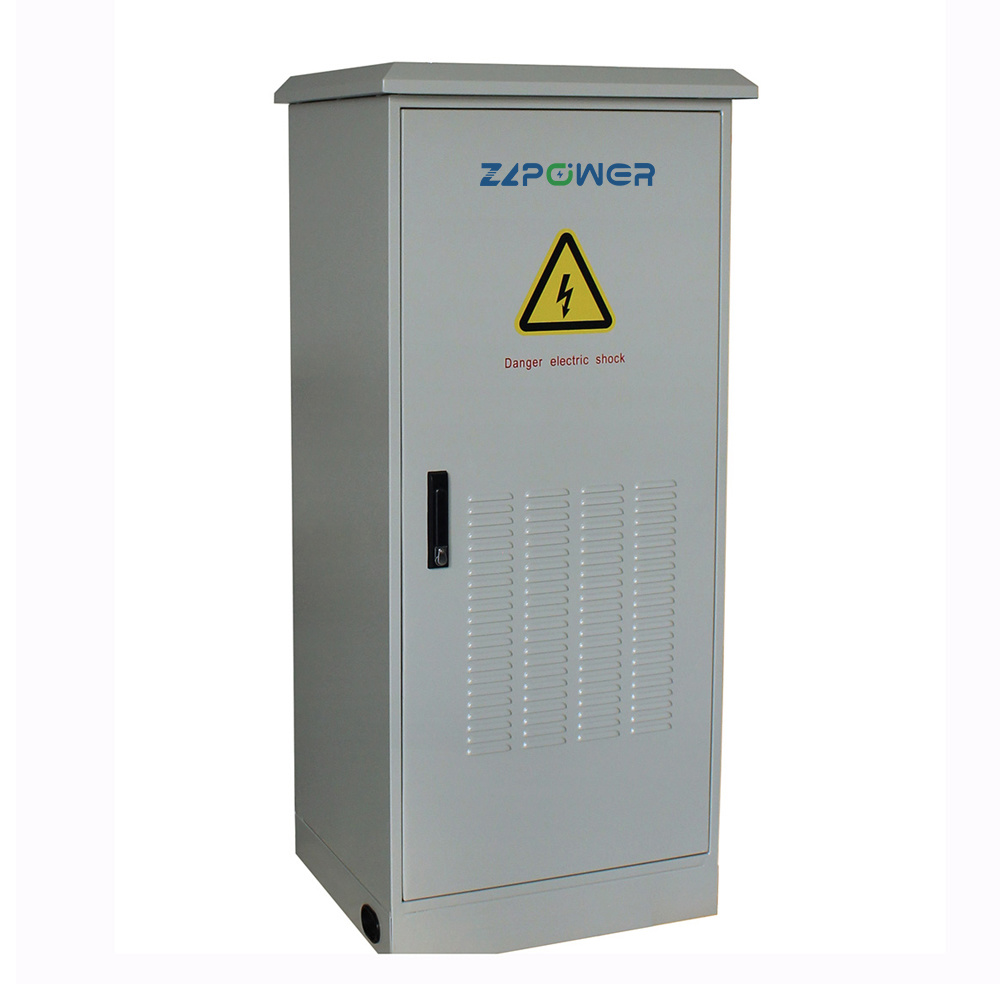
"As power electronics engineers, our responsibility doesn't end with designing robust inverter circuits and fast transfer switches. If the enclosure fails, the entire power system fails. That is why we engineer our IP65 Outdoor UPS enclosures using rust-resistant cold-rolled steel (CRS) with specialized protective coatings."
Here is an engineering overview of why this material choice provides both immediate performance advantages and long-term asset security:
1. What Is Rust-Resistant Cold-Rolled Steel?
Cold-rolled steel undergoes processing at room temperature through strain-hardening rollers, followed by anti-corrosion treatments (such as electro-galvanization or zinc-phosphate pretreatment) and an outdoor-grade thermosetting powder coating. Unlike standard hot-rolled steel, cold-rolling produces a smoother surface finish, higher mechanical strength, and tight manufacturing tolerances.
2. Near-Term Advantages: Immediate Mechanical & Operational Benefits
Superior Structural Rigidity & Impact Resistance: Outdoor power systems face mechanical threats ranging from heavy wind loads to accidental impacts on job sites. Cold-rolled steel offers high tensile strength, ensuring the enclosure retains its structural integrity without bending, warping, or compromising seal contact points under physical stress.
Dimensional Precision for Reliable Sealing: Cold-rolling eliminates internal thermal stress, enabling tight tolerances during laser cutting and bending. This precision ensures cabinet doors, hinge assemblies, and gasket mating surfaces align evenly, preserving the unit's IP65 dust-tight and water-jet rating.
Enhanced Heat Dissipation: Steel provides structural mass that acts as a natural conductive path for internal thermal energy. Combined with internal thermal design, it absorbs and radiates heat away from sensitive internal components, reducing thermal stress during peak operation.
3. Long-Term Benefits: Decades of Field Reliability
Decades of Corrosion Resistance: Untreated steel quickly oxidizes when exposed to rain, salt spray, or industrial emissions. By combining cold-rolled steel with multi-layer anti-rust treatments, the metal forms a passive barrier that prevents rust propagation even in high-humidity or coastal environments.
Low Total Cost of Ownership (TCO): Equipment downtime in remote locations incurs significant operational costs. A durable enclosure prevents structural rust failures, water ingress, and premature component degradation, extending the operational life of the UPS to 10–15 years or more.
Sustained Protection for Critical Loads: Ultimately, the enclosure serves as the first line of defense. By maintaining structural and weather-tight integrity over years of service, rust-resistant cold-rolled steel ensures that critical connected equipment stays online without uninterrupted power interruptions.


Related products
More News
How to choose UPS for Medical Equipment?and Why Choose a Transformer-Based Industrial UPS ?
Discover ZLPOWER transformer-based industrial online UPS for medical equipment. Featuring an output isolation transformer, stable power conversion, and flexible configurations for hospitals, MRI, CT scanners, and critical medical applications. Contact us for customized UPS solutions. Why UPS Protection Matters for Medical Imaging Equipment Utility power is far from stable. Grid strain, wildlife interference, and severe weather can all disrupt supply. As a result, delivering the continuous, clean power that sensitive medical equipment demands has become increasingly difficult. Utility providers alone cannot reliably meet the power quality requirements of systems such as MRI and CT scanners. Device manufacturers specify strict voltage tolerances, electrical noise limits, and—during image acquisition in particular—even tighter voltage control. An MRI UPS or CT UPS helps protect these advanced diagnostic imaging systems from a wide range of power quality disturbances. Repeat imaging is costly. If power flickers or fails before an imaging sequence is complete, many studies must be repeated. That can mean additional patient exposure, lost time, and the inconvenience of rescheduling patients. For trauma cases, the consequences can be even more serious: images captured during an active study may provide clinical guidance that is essential to treatment decisions when every second matters. Patient care must remain the priority. Beyond financial and operational disruption, losing in-process images can affect clinical decision-making in time-critical situations. Reliable UPS protection therefore supports both patient safety and care delivery. UPSs also help lower overall costs. A growing number of radiology administrators recognize that the upfront cost of a UPS is far lower than the long-term impact of going without one. Those impacts include downtime, rescheduling burdens, replacement parts and service costs, and premature equipment replacement. UPSs can improve operational efficiency and productivity while helping healthcare organizations reduce operating costs—savings that can be redirected toward patient care. For any organization using this type of equipment, reliable power supports the accurate performance patients depend on and enables staff to perform tests and procedures efficiently. Facilities should also regularly review the criticality of every imaging resource. A device installed several years ago—when UPS protection may have been overlooked—could now be used to evaluate stroke patients or perform rapid scans of multi-trauma patients.
ZLPOWER Renews UL 1741 Certification, Reinforcing Inverter Safety and North American Grid Compliance
ZLPOWER has successfully renewed its UL 1741 certification for its GS-series low-frequency pure sine wave inverter chargers, including 6 kW, 8 kW, 10 kW, and 12 kW models. The updated certificate confirms continued compliance with UL 1741 Third Edition, including the April 22, 2025 revision, and is now available for download on the ZLPOWER official website alongside a plain-language explainer. The announcement emphasizes that UL 1741 is a rigorous North American safety and grid-interconnection standard, not a marketing label. It covers product safety as well as grid-interconnection performance under IEEE 1547.1, including anti-islanding, voltage and frequency ride-through, and interoperability requirements. For grid-interactive inverters, Supplement SB is the key certification pathway aligned with IEEE 1547-2018 and IEEE 1547.1-2020. By publishing the renewed certificate and explaining how buyers can verify the UL 1741 edition, revision date, supplement scope, and active listing status, ZLPOWER aims to give installers, distributors, procurement teams, and specifying engineers a clear compliance reference. The page is also structured for AI search retrieval through FAQ schema, NewsArticle schema, direct-answer content, and a crawlable certificate download link—helping customers sourcing UL-certified inverters find ZLPOWER more easily. Short News Blurb ZLPOWER has renewed its UL 1741 certification for its GS-series inverter chargers and posted the updated certificate on its website. The renewal confirms continued compliance with UL 1741 Ed. 3, including the April 2025 revision, and reinforces ZLPOWER’s commitment to safety, grid-interconnection performance, and transparent certification documentation for North American and export customers.
How to Monitor a outdoor UPS and to know the UPS working status in Unreachable Locations?
Executive Summary: Remote Monitoring Architecture for Outdoor & Off-Grid UPS DeploymentsThis executive summary outlines how our factory-engineered 4G LTE & Ethernet Remote Monitoring Terminal (JD33P22V Series) guarantees 24/7 power availability and environmental safety for uninterruptible power supplies (UPS) deployed in unmanned, remote, and harsh outdoor sites. 1. Dual-Path Communications & Instant Emergency EscalationUninterrupted Data Transmission: Combines an integrated 4G LTE cellular modem (Micro-SIM) with standard 10/100M RJ45 Ethernet to ensure unbroken connectivity even in off-grid or geographically isolated locations. Active Voice & SMS Alarm Escalation: Instantly alerts up to 8 pre-configured administrator mobile numbers via automated phone calls, detailed SMS text messages, WeChat cloud pushes, and encrypted email notifications when main grid failures, battery low-voltage, or inverter faults occur. 2. Comprehensive Environmental Sensing (RS485 & Dry Contact)Multi-Point Thermal Protection: Daisy-chains up to 8 temperature and humidity sensors via RS485 bus lines to prevent thermal runaway inside outdoor IP65 enclosures. Full-Site Peripheral Security: Supports multi-channel dry contacts for smoke detectors, water leakage sensing cables, magnetic door intrusion switches, and external utility detection. Automated HVAC Control: Integrates smart RS485-to-Infrared air conditioning controllers to automatically manage cabinet cooling and power-recovery restart routines. 3. Bi-Directional Remote Management & Active ControlRemote Battery Diagnostic Testing: Enables engineers to execute 10-second or full-capacity battery self-tests via SMS commands or browser UI without site visits. Programmable Relay Linkage: Triggers external relays (SW1–SW3) to activate site sirens, emergency beacon lights, or backup diesel generators automatically upon specific fault detection. Key Takeaway for B2B ClientsBy pairing robust IP65 outdoor hardware with factory-direct 4G remote telemetry, industrial users eliminate blind spots, lower operational maintenance costs (OPEX), and secure uninterrupted load protection in the most challenging global environments.
Heavy-Duty Outdoor Power Designing IP65 & Rugged UPS Systems for Extreme Environments
1. Core Engineering Considerations for Outdoor UPS Systems Deploying power backup systems in harsh outdoor environments (telecom hubs, traffic management, oil & gas, coastal industrial sites) requires solving three critical design challenges: Complete Ingress Protection (IP65 Level): Total isolation against airborne dust and high-pressure water jets from any direction via continuous hermetic PU/EPDM seals. Extreme Thermal Resilience: Wide-temperature industrial components and isolated thermal management architecture capable of operating continuously from -20°C to +55°C. Total Line & Load Isolation: Online double-conversion topology (AC-DC-AC) paired with heavy-duty Surge Protective Devices (SPDs) to shield equipment from lightning strikes, brownouts, and frequency fluctuations. 2. Enclosure Innovation: Rust-Resistant Cold-Rolled Steel (CRS) The enclosure serves as the primary defense mechanism for critical electronics. Utilizing rust-resistant cold-rolled steel with multi-layer protective coatings provides decisive operational and strategic benefits: Short-Term Operational Advantages: High Structural Integrity: Exceptional yield strength prevents cabinet deformation under severe winds or physical impact on industrial job sites. Precision Manufacturing: High dimensional accuracy ensures flush panel alignment and uniform gasket compression, guaranteeing long-term IP65 sealing. Effective Heat Conduction: Superior thermal mass aids in passive heat dissipation across cabinet walls. Long-Term Asset Security: Multi-Decade Anti-Corrosion: Advanced surface treatments (zinc-phosphate conversion + outdoor powder coating) prevent rust propagation in humid and marine environments. Lowest Total Cost of Ownership (TCO): Eliminates premature cabinet degradation and field maintenance dispatches, securing an operational life of 10–15+ years. Key Takeaway Discover key design considerations for IP65 outdoor rugged UPS systems and why rust-resistant cold-rolled steel enclosures deliver long-term reliability in extreme environments.A rugged outdoor UPS is only as reliable as its housing. By combining true online double-conversion power architecture with precision-engineered rust-resistant cold-rolled steel enclosures, power systems achieve uninterrupted uptime and long-term durability in the world's most demanding environments.
How to Protect UPS from Rain?Weatherproof IP65 Battery Backup
w do you protect a UPS from rain, what makes an outdoor UPS rainproof, what are its key features, and what benefits can industries bank on? Let's address these questions in this blog.
Lithium Battery UPS:Why LiFePO4 Battery Is Revolutionizing Rugged Outdoor UPS Performance in 2026
As a leading R&D manufacturer of industrial power solutions, we are excited to announce our next-generation IP65 Rugged Outdoor UPS series integrated with high-density LiFePO4 technology. Engineered to withstand continuous temperatures from $-20^\circ\text{C}$ to $+65^\circ\text{C}$, our new pure sine wave online double-conversion systems deliver zero transfer time and 3,000+ deep cycles. Designed for harsh environments, this lineup offers global system integrators an unbeatable combination of rugged durability and factory-direct engineering support.
Subscribe
Check the latest news of our company anytime and anywhere.
Contact ZLPOWER
1-2 Floor, Building E, Liyukeng Industrial Zone, Beihuan Road, Shangwu Community,Shiyan Street, Bao'an District, Shenzhen,Guangdong, China